
Boiler Mountings - Dead Weight Safety Valve

DEAD WEIGHT SAFETY VALVE

Function:-

A valve is placed upon a valve seat that is fixed upon a long vertical pipe having a flange at the bottom for fixing at the top of the boiler. Suspended at the top of the valve is the weight carrier that carries cast iron rings. The total weight must be sufficient to keep the valve on its seat against the normal working pressure. When the steam pressure exceeds the normal limit, it lifts the valve with its weight & the excess steam escape through the pipe to the outside. This valve is used only with stationary type of boilers. It is the most elementary type of safety valve. The objection to dead weight safety valve is the heavy weight that has to be carried.
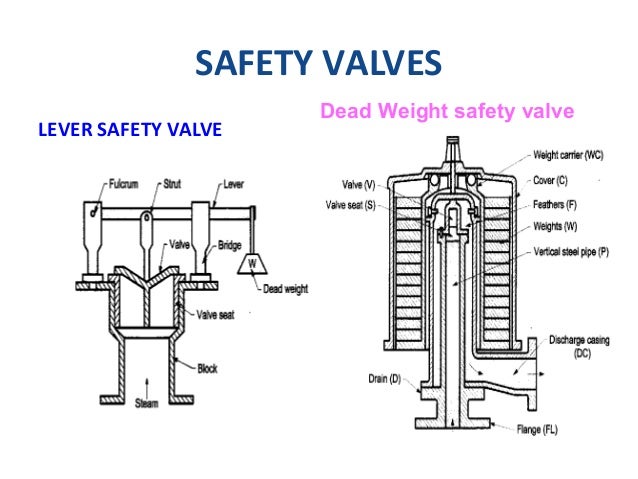
Image - Dead Weight Safety Valve
Figure - Dead Weight Safety Valve


Comments

  1. Keep sharing such informative post, Global Manufacturer and Supplier of Gate Valves and Strainers offers best quality Ball Valve, Gate Valve, GLobe Valve, Plug Valve and other valves. Buy online!
    Gate Valve manufacturers

    ReplyDelete
  2. Thanks for sharing this information. To know more click on Suppliers of bolt in Chennai

    ReplyDelete
  3. Nice information sir. Need your help to understand ICT.

    ReplyDelete
  4. Which one is most recommended one. Dead weight or lever operated?

    ReplyDelete
  5. This comment has been removed by the author.

    ReplyDelete
  6. Amazing article explained with detailed information.
    We Provide ERP Software for Manufacturing Industry that can help your business.

    ReplyDelete
  7. Advanced topics in STAAD. Pro, offered by APTRON, delve into the intricacies of structural analysis and design software. These advanced courses are tailored for professionals and students seeking a deeper understanding of this powerful tool.

    ReplyDelete
  8. Cool and that i have a neat proposal: What Was The First Home Renovation Show house renovation contractors near me

    ReplyDelete
  9. This comment has been removed by the author.

    ReplyDelete
  10. The article explains the subject matter clearly, and Vacuum Gauges may help readers broaden their understanding.

    ReplyDelete

Post a Comment

Popular posts from this blog

DOM MANUAL / B-TECH / MECHANICAL / KUK - TO FIND THE SPEED AND TORQUE OF DIFFERENT GEARS IN AN EPICYCLIC GEAR TRAIN.

OBJECTIVE: TO FIND THE SPEED AND TORQUE OF DIFFERENT GEARS IN AN EPICYCLIC GEAR TRAIN. SPECIFICATIONS : 1.       GEAR TRAIN : SUN GEAR : 14 TEETH 2.       PLANT GEAR: 21 TEETH (2 NOS.) 3.       INTERNAL GEAR WITH : 56 TEETH TORQUE MEASUREMENT ·          INPUT TORQUE – MOTOR CURRENT CALIBRATED FOR MOTOR TORQUE. ·          PLANT CARRIER - PULLEY OF 50 MM DIA AND SPRING BALANCE. ·          INTERNAL GEAR - PULLEY, 120 MM DIA AND SPRING BALANCES. Ø   BOTH PULLEYS ARE PROVIDED WITH ROPE OF 12 Ø   MM DIA Ø   DRIVE MOTOR - 1HP DC MOTOR RPM MOTOR OPERATING ON 220 VOLTS Ø   50 HZ SUPLLY, DRIVING THE SUN GEAR. CURRENT(AMPS) TORQUE 1.00 0.5 1.20 1.5 1.40 2.5 ...

MANUFACTURING PROCESS - DRAFT OR TAPER ALLOWANCE

DRAFT OR TAPER ALLOWANCE BY DRAFT IS MEANT THE TAPER PROVIDED BY THE PATTERN MAKER ON ALL VERTICAL SURFACES OF THE PATTERN SO THAT IT CAN BE REMOVED FROM THE SAND WITHOUT TEARING AWAY THE SIDES OF THE SAND MOLD AND WITHOUT EXCESSIVE RAPPING BY THE MOLDER. FIGURE  SHOWS A PATTERN HAVING NO DRAFT ALLOWANCE BEING REMOVED FROM THE PATTERN. IN THIS CASE, TILL THE PATTERN IS COMPLETELY LIFTED OUT, ITS SIDES WILL REMAIN IN CONTACT WITH THE WALLS OF THE MOLD, THUS TENDING TO BREAK IT.  FIGURE  IS AN ILLUSTRATION OF A PATTERN HAVING PROPER DRAFT ALLOWANCE. HERE, THE MOMENT THE PATTERN LIFTING COMMENCES, ALL OF ITS SURFACES ARE WELL AWAY FROM THE SAND SURFACE. THUS THE PATTERN CAN BE REMOVED WITHOUT DAMAGING THE MOLD CAVITY.  PATTERN HAVING DRAFT ON VERTICAL EDGES DRAFT ALLOWANCE VARIES WITH THE COMPLEXITY OF THE SAND JOB. BUT IN GENERAL INNER DETAILS OF THE PATTERN REQUIRE HIGHER DRAFT THAN OUTER SURFACES. THE AMOUNT OF DRAFT DEPENDS UPON THE LENGTH OF THE...

ELECTROCHEMICAL MACHINING (ECM)

ELECTROCHEMICAL MACHINING (ECM) INTRODUCTION:- Electro chemical machining (ECM) is a method of removing metal by an electrochemical process. It is normally used for mass production and is used for working extremely hard materials or materials that are difficult to machine using conventional methods. Its use is limited to electrically conductive materials; however, this includes all metals. ECM can cut small or odd-shaped angles, intricate contours or cavities in extremely hard steel and exotic metals such as titanium, carbide etc. ECM is often characterized as "reverse electroplating," and is similar in concept to electrical discharge machining in that a high current is passed between an electrode and the part, through an electrolyte material removal process having a negatively charged electrode (cathode), a conductive fluid (electrolyte), and a conductive work piece (anode); however, in ECM there is no tool wear. The ECM cutting tool is guided along the desired ...